How far does scientific fraud interfere? Case History and BIA-ALCL: From Life to Death.
- jemmaquilleuse
- 14 août 2022
- 19 min de lecture
Dernière mise à jour : 16 mars 2023
In February 2022, an article written by Dr. Eric Swanson was published on several scientific content platforms.
Although the subject and content of the article should have alerted not only the medical and scientific community but also those of patients, the article remained in the shadows.
Dr. Swanson denounces the fact that the most consulted and most quoted “scientific” article about BIA-ALCL is not in fact a “study” but a SURVEY whose data has been manipulated, whose CRITICAL information was truncated and whose conclusions were made IN FAVOR of the industry rather than to protect patients.
Said study and its authors as well as industry representatives (including health care professionals paid by the industry) continue to blame surgeons and their operating techniques rather than any type of breast implants which should have been withdrawn from the market much earlier, thus sparing thousands of women from this cancer of the immune system.
I took a personal interest in Dr. Swanson’s article and quickly became OUTRAGED not only of the conclusions of the article but of the fact that NO ONE in the medical, scientific community, no one in any patient protection committees or major public health agencies got interested in the content and that the conclusions only raised a broader questioning.
ALL the points raised in the article can be verified. EVERY claim is documented. The COMPREHENSIVE list of references alone is worth the read.
After reading Dr. Swanson's article, I spent a few months interested in its "lack of impact" and why such an article would NOT come to light, since, in my opinion, it exposed one of the greatest scientific frauds of recent years, and why it would remain so little read and shared.
The conclusions speak for themselves:
For the authors of the study-survey as well as for the industry which finances them, it is ESSENTIAL that this type of article (that of Dr. Swanson in particular) remains unknown-unshared.
It is of the utmost importance that doctors and surgeons remain ignorant to the fact that the data of the survey-study have been manipulated, biased.
It is much easier to blame surgeons' techniques than an object that brings in billions of $$$ to manufacturers, their representatives and doctors who profit from it and gain scientific notoriety on the backs of patients than they manhandle and on the back of their colleagues who have decided not to participate in the conflict of interest.
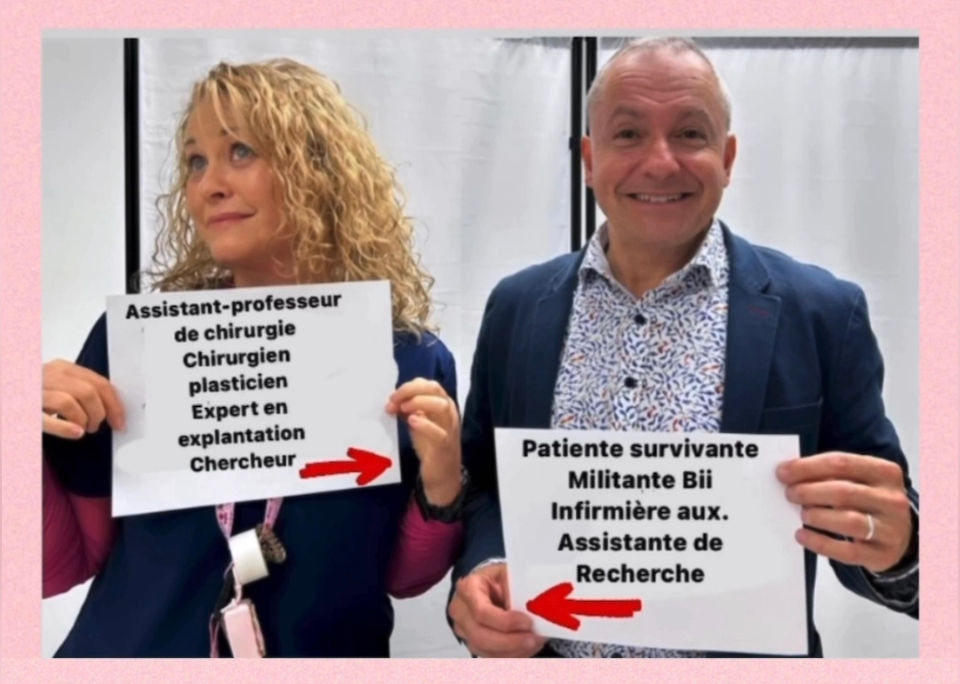
So, wanting to give new impetus to Dr. Swanson's article, I contacted him, asking permission to translate it on an unofficial basis, for the simple purpose that the French-speaking community of women with breast implants can also have access to the absolutely pivotal information it contains. With the aim that this article is shared and re-shared all over the world. Let us give it a second wind.
Dr. Swanson has given his consent, in writing, for a translation as faithful as possible to the original english text, including all the annotations as well as the original references. The translation was done by Julie Elliott and the revision of the translated text was done by Valérie Picard,RN.
Obviously, whenever possible, we suggest reading the original English article, the link to which is available below.
The original article by Dr. Eric Swanson is available here:
https://journals.lww.com/annalsplasticsurgery/Fulltext/2022/06000/Concerns_Regarding_Dishonesty_in_Reporting_a_Large.1.aspx
Thanks to Dr. Eric Swanson for agreeing to the translation of his article
and to Valérie Picard, Nurse (RN) for the revision of the translation.
If you decide to share this article and its translation you MUST at least include the bolded paragraph above as well as the link to the original English article by Dr. Swanson.
If you decide to share this blog link on social media, please tag @julie_elliott_bii_qc (Julie Elliott), @valeriepicard (Valérie Picard) and @swansoncentercosmeticsurgery (Dr. Eric Swanson) in your post. This is for the sole purpose of seeing how many times this article will be seen.
If you are a patient who has textured implants whatever they are, you MUST read and share this article.
How far does scientific fraud interfere?
Concerns Regarding Dishonesty in Reporting a Large Study of Patients Treated With Allergan Biocell Breast Implants.
Swanson, Eric MD
Author Information
Annals of Plastic Surgery: June 2022 - Volume 88 - Issue 6 - p 585-588
doi: 10.1097/SAP.0000000000003199
In 2017, Adams et al1 published a study reporting no cases of breast implant–associated anaplastic large-cell lymphoma (BIA-ALCL) among 8 plastic surgeons implanting a total of 42,035 Allergan (now AbbVie Corp, Lake Bluff, IL) Biocell implants. This open-access publication quickly became one of the most viewed studies in the plastic surgery literature. It was featured as a cover article and was the subject of a journal club discussion and podcast. This article is ranked at the 98th percentile among all articles of a similar age. It has received 5372 full text views to date and has been cited in 129 publications.2
In February 2019, Dr Jason Hammer, executive medical director of Abbvie, testified before the French health regulatory agency that biofilm was the leading theory for the development of BIA-ALCL, and this complication could be prevented by following the 14-point plan.3 He cited the 2017 “international multicenter study” of 42,000 Biocell implants “followed for over 11 years.”
The following month, at the 2019 Hearing of the Food and Drug Administration (FDA), the same publication1 was cited to support the continued use of macrotextured implants.4 Adams, the lead author, testified that adoption of the 14 points could eliminate the risk of BIA-ALCL. Another plastic surgeon, and spokesperson for Allergan, also referenced this 2017 study1 in her testimony and claimed a zero rate of BIA-ALCL when the 14 steps are followed. A handout distributed at the meeting and still available at the FDA Web site includes this claim and reference.5
Six of the 8 authors of the 2017 study1 disclosed that they were Allergan consultants,1 including Adams, who denied financial conflicts at the FDA hearing,4 despite a publication disclosing his conflicts with Allergan and Sientra.6 According to the Dollars for Docs Web site, Adams received more than US $100,000 from Allergan between 2016 and 2018.7 Jewell, a coauthor, reported no conflict of interest.1 However, he received over $700,000 from Allergan between 2013 and 2018.7 The eighth author, Culbertson, received $2000 from Allergan in 2018.7
In 2018, Wan and Rohrich coauthored a Continuing Medical Education article8 reiterating the 14 points to reduce capsular contracture and BIA-ALCL risk and referencing the 2017 study by Adams et al.1 This study included a disclosure that Rohrich was an Allergan consultant,8 having received $26,500 in consulting fees between 2016 and 2018, according to Dollars for Docs.7
The illustration in the authors' study, showing a prepectoral implant being contaminated at the time of insertion or from an unrelated bacteremia, was duplicated from a previously published industry-sponsored study.9
The conclusions of the 2017 study1 challenged the prevailing evidence, reported in a 2015 landmark study by Brody et al10 that the product itself, not the surgical technique, is responsible for BIA-ALCL. Concerned about problems with this 2017 publication and implications for patients, Swanson11 published an editorial critical of the 14-point plan. Previous publications and presentations made by the authors revealed that they did not follow many of the 14 points.11 Moreover, an average follow-up time of 11.7 years (range, 1–14 years) was not possible based on previously published work.11 The article by Adams et al1 was submitted for publication only 3 years after publication of the 14 points.9 The conclusion that “technique is a critical factor,” repeated at the FDA hearing,4 was unsupported.11 The only point known to reduce risk is avoiding textured implants, and avoidance is not one of the 14 points.11
Possibly influenced by the unanimous testimony of plastic surgeons defending textured implants,12 on May 2, 2019, the FDA ruled that there was insufficient evidence to support a ban on textured implants.13 On July 24, 2019, the FDA reversed its earlier decision and requested that Allergan withdraw Biocell implants from the market.14
At the 2019 FDA hearing, Clemens4 reported no scientific evidence to support the 14 points. There is still no known case of a bacterial endotoxin causing a T-cell lymphoma.4 A causal link to a gram-negative bacterium (including Ralstonia pickettii) is unsupported.15 Chronic inflammation likely predisposes to BIA-ALCL, although the pathway remains unknown. The etiology must account for the absence of this complication in women with smooth implants.16 Mechanical factors and silicone particles may be implicated.16 Textured implants are categorically different in this regard from smooth implants; the difference is not a quantitative one, unlike bacterial counts.
Culbertson, coauthor of the 2017 publication,1 along with Adams and Deva, published an article in 2020 claiming that the 14-point plan has been proven to reduce capsular contracture rates by a factor of 10 over the past 20 years and minimizes the risk of BIA-ALCL.17 The authors claim that a gram-negative microbiome is key to its pathogenesis, despite evidence of no specific microbiome associated with BIA-ALCL.15 In fact, capsular contracture rates reported in core studies have not changed over the last 2 decades,11,18 and no scientific evidence supports the efficacy of the 14 points.4,11,16,18 All 3 plastic surgeon/authors denied a conflict of interest,17 despite previous disclosures by Adams and Deva confirming a financial conflict with implant manufacturers,1,6 and a $2000 gift to Culbertson from Allergan in 2018.7
The 2017 article by Adams et al,1 supporting a technique-related (i.e., surgeon-related) etiology for BIA-ALCL, has been a key component of lawsuits brought against the implant manufacturer, as noted by Clemens at the 2021 BIA-ALCL Symposium.16 This 2017 article1 is used by the manufacturer to defend these lawsuits. To suggest that surgeons are to blame for suboptimal sterility leading to BIA-ALCL, Deva presented a slide depicting the operating plastic surgeon as Miss Piggy, the Muppets character, at a 2018 meeting.19
The 2017 article includes a suggestion that BIA-ALCL is a lymphoproliferative disorder and that the World Health Organization was mistaken in classifying it as a malignancy.1 The lead author labels it “Brody's disease” instead.20 Sieber and Adams,21 in their “patient oriented” micromort analysis, suggest that the risk is an acceptable one for patients to take.
More than 1148 women have been diagnosed with BIA-ALCL worldwide, and at least 35 women have died of it.16 The enormous patient suffering was on full display at the 2019 FDA hearing, with affected women, some fighting for their lives, making an impassioned plea to have this product removed from the marketplace.4,12 Remarkably, and sadly, none of the 40 plastic surgeons, including 24 women, testifying before the FDA recommended a ban on textured implants.22
Recently, additional serious and troubling factual problems have come to light.23 The original manuscript of the 2017 study1 submitted to Plastic and Reconstructive Surgery revealed that the publication was not actually a clinical study but rather a survey. The authors were sent a survey by SurveyMonkey asking 8 questions: the number of Biocell implant patients, the number of implants used, mean follow-up time, number of polyurethane implants and mean follow-up time, a breakdown of cases, number of BIA-ALCL cases, and a 14-point checklist.23
Important sentences were deleted in the revision, including the following: “We sought to survey breast augmentation surgeons who routinely use macrotextured implants” and “A Survey (Fig. 1) was sent to eight plastic surgeons in 4 countries known to routinely use textured implants in breast augmentation.” The sentence “Of course, significant caution must be exercised when drawing conclusions from survey-based studies” was removed.23 The word “survey” does not appear in the final manuscript.1 “Four countries” were increased to 5.1 In fact, there is no fifth country (the contributors are from the United States, United Kingdom, Australia, and Sweden).
The sentence “None of the surgeons were aware of the development of implant-associated ALCL among their patients” was changed to the more definitive “There were no cases of BIA-ALCL.” The sentence “It is also possible that ALCL was diagnosed among these patients after the surgeon's last contact with that patient” was removed. The authors' Figure 1, the survey itself, was deleted. Disclosure of the fact that the industry-funded illustration was previously published was omitted, along with a sentence recognizing the need for chemotherapy and radiation in some patients.
Medical professionals are aware that surveys do not constitute rigorous data. Surveys are notoriously prone to recall bias. This type of bias cannot be corrected after study completion.24 Importantly, the 2017 article did not include institutional review board approval, a prerequisite for a study involving human subjects.25
The 2017 article1 included no mention of how each patient was contacted to determine if BIA-ALCL or capsular contracture had occurred. The original manuscript reported a minimum follow-up of 5 years, despite one author's reporting 1100 patients with a 1-year mean follow-up time.23 In the final version, the authors changed the 5-year minimum to 1 year.1
The original manuscript reported an 8.8-year mean follow-up period for patients with Biocell implants.23 This time was increased to 11.7 years in the final version (but reduced to 9 years by Adams in his 2019 FDA presentation).4 Hedén23 reported by far the largest number of patients (16,000) and implants (31,000). The conspicuous roundness of these numbers and the fact that they are not in an approximate 1:2 ratio are unexplained. This Swedish contributor claimed a mean 14-year follow-up for his huge number of patients. Few cosmetic patients return for long-term follow-up visits,26 so the possibility of achieving a 14-year mean follow-up time in 16,000 women is highly questionable. Originally, the follow-up times had been calculated based on all 8 authors having the same number of patients. In fact, the procedure data in the authors' Table 2 were calculated using this method. The figures are incorrect because of the vastly different (from 35 to 16,000) patient sizes submitted by the 8 authors.
The original survey data confirmed that the authors omitted many of the 14 points, especially when performing breast reconstruction (mean, 4.7 points according to survey data),23 despite Adams' insistence otherwise.20 It is difficult to imagine performing breast reconstructions while always avoiding a periareolar incision, using nipple shields, using an introduction sleeve, avoiding a traumatic dissection, avoiding a parenchymal dissection, and using a dual-plane pocket (points 2, 3, 4, 6, 7, and 9). A parenchymal dissection (point 6) is needed when performing augmentation/mastopexy (9.9% of cases1). “Prospective hemostasis” (point 5) is a euphemism; not all vessels can be identified and cauterized before they are divided. A layered repair (point 13) is simply ordinary operative technique. Point 14, the use of antibiotics at the time of later unrelated (eg, dental) procedures, is beyond the plastic surgeon's control and therefore cannot “count” as part of an operative strategy.
Van Natta,27 in a letter published in another journal, commented that the 2017 paper1 “is retrospective without documentation of the details of actual follow up” and “no meaningful conclusions can be drawn.” Furthermore, he stated that, “presumptively assuming that if the patients haven't returned, then nothing must be wrong and therefore no cases of BIA-ALCL have occurred is not rigorous science.”
The authors' lack of proper methodology and transparency may be compared with a prospective clinical series of patients reported by Cordeiro et al,28 documenting 10 women diagnosed with BIA-ALCL among a cohort of 3546 breast reconstruction patients who received Biocell implants (1:355 risk). Mark Jewell, one of the 2017 study coauthors, contrasted these results with the 2017 publication reporting zero cases of BIA-ALCL,1 speculating that the difference may be caused by “surgical technique on the part of Dr Cordeiro or poor institutional hygiene at MSKCC (Memorial Sloan Kettering Cancer Center), or ineffectual breast pocket irrigation with bacitracin.”29 Most plastic surgeons believe that Cordeiro et al28 identified more cases of BIA-ALCL than other series because of their exceptional and commendable long-term follow-up at this world renowned cancer center.16,27
In support of an infectious etiology for BIA-ALCL, Adams et al1 referenced an industry-funded microbiological study by Hu et al.30 The findings of this study are often misquoted. Hu et al30 found 4.7 × 10⁶ bacteria/mg in BIA-ALCL capsule samples versus 4.9 × 10⁶ bacteria/mg in the nontumor capsule specimens from patients with capsular contracture. The nontumor samples from patients with capsular contracture but without BIA-ALCL actually contained more bacteria than the BIA-ALCL samples. A comparison of bacterial counts, comparing the breast capsule affected by BIA-ALCL to the normal breast capsule in 3 women, was much too small to be significant.18
What is the basis for this proindustry (and antisurgeon) prejudice? The proverbial “elephant in the room” is conflict of interest. At the 2017 meetings of the American Society for Aesthetic Plastic Surgery and the American Society of Plastic Surgeons, 46% and 34% of the speakers respectively were reimbursed by Allergan, totaling $6.57 million.31 Corporate entanglement is increasing; in 2018, Allergan paid out almost $10 million to plastic surgeons.32 Multimillion dollar payments are made to our societies and meetings,33 although the amount is not publicly available. A 2018 editorial warned that our plastic surgery professional societies were becoming a de facto “Allergan Society of Plastic Surgeons.”33 Conflicted plastic surgeons and societies may protect their (perceived) benefactor, even at the expense of their patients.12,22,33,34 As reported by his successors, in 2004,35 Dr Robert Goldwyn, former long-time editor of Plastic and Reconstructive Surgery, was deeply concerned about commercial influence. He admonished the (long departed) incoming managing editor to keep the journal pure. He demanded a commitment to “see to it that the Journal doesn't sell out to special interests.” He called it a “commitment to which you must succeed, a promise you must fulfill!” (authors' italics and punctuation).35
The purpose of peer review is to ensure that publications are not essentially flawed and to protect the public from possibly harmful procedures and products. The goal of peer review is not to identify problems that can be concealed by the authors so that the readership is unaware (eg, the fact that the study is not a rigorous clinical study with follow-up appointments but simply a survey). Indeed, such a process represents peer review in reverse.
Recognizing the dangers of financial conflicts, in 2010, the Council of Medical Specialty Societies published a code for interactions with companies, prohibiting society officers and journal editors from accepting any compensation from industry.36
Publication of the 2017 study sent a message to the readership that Biocell implants were safe to use if the 14 points are followed. Even today, neither the American Society of Plastic Surgeons nor the American Society for Aesthetic Plastic Surgery includes in its guidelines a recommendation to abandon textured implants, or a recommendation to patients that they choose smooth implants instead.37,38 Such a recommendation is absent from industry-funded journal supplements.39,40
One society Web site continues to promote a bacterial etiology and includes the industry talking point that the “FDA recommendations and society recommendations indicate that patients with textured implants with no issues should not do anything and implant removal is not recommended.”38 This statement is intrinsically flawed. Affirmatively recommending that patients do nothing is not the same as not recommending implant removal.22,41 The reason is not because the BIA-ALCL risk is exceptionally low or trivial. Rather, the FDA “does not recommend removal for patients without symptoms due to potential risks.”14 These risks are related to surgery to replace the implant. Explantation or implant replacement, however, particularly without capsulectomy (for which there is no evidence of a prophylactic value), is extremely safe.16,41
It defies logic to recall a device because of a cancer risk but also advise women that they do not need to have their textured implants replaced.41 Such a recommendation obviously benefits the manufacturer by avoiding financial liability for implant removal or replacement. Cordeiro, a former advocate for Biocell implants, has now replaced hundreds of these devices in his patients with smooth implants.16 To suggest to patients that a textured implant can be “the best choice”38 is unsupported and dangerous, and at odds with all evidence.16
This potentially harmful product should have been removed from the market shortly after Brody et al,10 to their enormous credit, reported the link to texture in 2015. Unfortunately, this message was delayed for several years and is still muddled today by industry surrogates, particularly Adams, who has stated, even after the report of Brody et al,10 that the risk of BIA-ALCL is less that the risk of being struck by an asteroid and that the data suggest a different cause than texture.42 Consequently, these dangerous implants remained available in the marketplace far too long.22 Plastic surgeons should have led the effort to ban these devices and not left it to the FDA to (eventually) make the correct call despite their protestations.12,22 Many women may have been spared this cancer, which may be avoided simply by using smooth implants. Indeed, every case of BIA-ALCL—all 1148 of them and 35 deaths16—may have been avoided by choosing smooth implants instead.
This sad episode has caused tremendous hardship for our patients, and yet the lesson appears not to have been learned. At the 2021 BIA-ALCL symposium,16 several international plastic surgeons, including Mallucci, coauthor of the 2017 study,1 defended textured breast implants and minimized the risk of BIA-ALCL. The 14-point “best practices” fiction is still being promoted.8,16,43,44 In 2020, Danilla et al45 claimed that smooth implants are more dangerous than textured implants, based on flawed calculations.46
In a 2021 video presentation at the Baker Gordon Symposium, Adams reiterated the industry-driven narrative that following the 14 points is critical to prevent BIA-ALCL.43 At the 2021 ASPS meeting, Adams again denied financial conflicts and repeated the narrative that surgical technique is relevant to the etiology of BIA-ALCL and that gram-negative bacteria are implicated.44 He repeated the accusation that the cluster of cases reported by Cordeiro signifies infection and a lapse in surgical sterility. He recommended Betadine irrigation to reduce risk—a key provision of the 14-point plan.1 He dismissed the fact that 10% Betadine is nonsterile (and not approved for administration in an open wound47) as “urban legend.”
Plastic surgeons and patients deserve to be informed regarding serious deficiencies of this widely viewed article, which sends the wrong message and jeopardizes patient health.
REFERENCES
1. Adams WP Jr., Culbertson EJ, Deva AK, et al. Macrotextured breast implants with defined steps to minimize bacterial contamination around the device: experience in 42,000 implants. Plast Reconstr Surg. 2017;140:427–431.
Cited Here | View Full Text | PubMed | CrossRef | Google Scholar
2. Metrics. Macrotextured Breast Implants with Defined Steps to Minimize Bacterial Contamination around the Device: Experience in 42,000 Implants. Macrotextured Breast Implants with Defined Steps to Minimize... : Plastic and Reconstructive Surgery. Available at: https://journals.lww.com/plasreconsurg/Fulltext/2017/09000/Macrotextured_Breast_Implants_with_Defined_Steps.1.aspx. Accessed December 29, 2021.
Cited Here | Google Scholar
3. Auditions sur les implants mammaires texturés en chirurgie esthétique et reconstructrice (Partie 1). Streamed live on February 7, 2019. Available at: https://www.youtube.com/watch?v=H2zmIBWGYuI&t=14900s. Accessed December 29, 2021.
Cited Here | Google Scholar
4. Webcast. General and Plastic Surgery Devices Panel Meeting. Day 1. Available at: http://fda.yorkcast.com/webcast/Play/a6baa43b37004ecab288779ac3a263bd1d. Accessed December 29, 2021.
Cited Here | Google Scholar
5. Allergan Breast Implants: Benefits and Risks. Available at: https://www.fda.gov/media/123015/download. Accessed December 29, 2021.
Cited Here | Google Scholar
6. Magnusson MR, Cooter RD, Rakhorst H, et al. Breast implant illness: a way forward. Plast Reconstr Surg. 2019;143:74S–81S.
Cited Here | View Full Text | PubMed | CrossRef | Google Scholar
7. Dollars for Docs. Available at: https://projects.propublica.org/docdollars/doctors/pid/5787. Accessed December 29, 2021.
Cited Here | Google Scholar
8. Wan D, Rohrich RJ. Modern primary breast augmentation: best recommendations for best results. Plast Reconstr Surg. 2018;142:933e–946e.
Cited Here | View Full Text | PubMed | Google Scholar
9. Deva AK, Adams WP Jr., Vickery K. The role of bacterial biofilms in device-associated infection. Plast Reconstr Surg. 2013;132:1319–1328.
Cited Here | View Full Text | PubMed | CrossRef | Google Scholar
10. Brody GS, Deapen D, Taylor CR, et al. Anaplastic large cell lymphoma occurring in women with breast implants: analysis of 173 cases. Plast Reconstr Surg. 2015;135:695–705.
Cited Here | View Full Text | PubMed | CrossRef | Google Scholar
11. Swanson E. A 1-point plan to eliminate breast implant-associated anaplastic large-cell lymphoma. Ann Plast Surg. 2018;80:565–466.
Cited Here | Google Scholar
12. Swanson E. Plastic surgeons defend textured breast implants at 2019 U.S. Food and Drug Administration hearing: why it is time to reconsider. Plast Reconstr Surg Glob Open. 2019;7:e2410.
Cited Here | View Full Text | PubMed | CrossRef | Google Scholar
13. FDA Statement. Available at: https://www.fda.gov/news-events/press-announcements/statement-fda-principal-deputy-commissioner-amy-abernethy-md-phd-and-jeff-shuren-md-jd-director-fdas. Accessed December 29, 2021.
Cited Here | Google Scholar
14. FDA takes action to protect patients from risk of certain textured breast implants; requests Allergan voluntarily recall certain breast implants and tissue expanders from market. Available at: https://www.fda.gov/news-events/press-announcements/fda-takes-action-protect-patients-risk-certain-textured-breast-implants-requests-allergan. Accessed December 29, 2021.
Cited Here | Google Scholar
15. Walker JN, Hanson BM, Pinknes CL, et al. Insights into the microbiome of breast implants and periprosthetic tissue in breast implant-associated anaplastic large cell lymphoma. Sci Rep. 2019; $$Jul 17;9:10393.
Cited Here | PubMed | Google Scholar
16. Webcast. 3rd World Consensus Conference on BIA-ALCL. 7th International Breast Surgery Workshop. October 8–9, 2021. Available at: https://www.youtube.com/watch?v=YYHSUPUyUJs. Accessed December 29, 2021.
Cited Here | Google Scholar
17. Culbertson EJ, Felder-Scott C, Deva AK, et al. Optimizing breast pocket irrigation: the breast implant-associated anaplastic large cell lymphoma (BIA-ALCL) era. Aesthet Surg J. 2020;40:619–625.
Cited Here | PubMed | CrossRef | Google Scholar
18. Swanson E. A rebuttal of antibiotic irrigation as a method to reduce risk of capsular contracture and breast implant-associated anaplastic large cell lymphoma. Ann Plast Surg. 2020;85:461–463.
Cited Here | View Full Text | PubMed | CrossRef | Google Scholar
19. Deva AK. Panel: hot topics in breast surgery—ALCL, texture, biofilms. In: Meeting of the American Society for Aesthetic Plastic Surgery; April 26-May 1, 2018; New York, NY.
Cited Here
20. Adams WP Jr. Reply: macrotextured breast implants with defined steps to minimize bacterial contamination around the device: experience in 42,000 implants. Plast Reconstr Surg. 2018;142:413e–414e.
Cited Here | View Full Text | PubMed | Google Scholar
21. Sieber DA, Adams WP Jr. What's your micromort? A patient-oriented analysis of breast implant-associated anaplastic large cell lymphoma (BIA-ALCL). Aesthet Surg J. 2017;37:887–891.
Cited Here | View Full Text | PubMed | CrossRef | Google Scholar
22. Swanson E. The Food and Drug Administration bans textured breast implants: lessons for plastic surgeons. Ann Plast Surg. 2020;84:343–345.
Cited Here | View Full Text | PubMed | CrossRef | Google Scholar
23. Calvin Parr vs. Allergan, Inc., et al. Available at: https://dockets.justia.com/docket/new-jersey/njdce/2:2020cv00859/426204. Accessed December 29, 2021.
Cited Here | Google Scholar
24. Recall Bias: Definition, Examples, Strategies to Avoid It. Available at: https://www.statisticshowto.com/recall-bias/. Accessed December 29, 2021.
Cited Here | Google Scholar
25. Electronic Code of Federal Regulations. Available at: https://www.ecfr.gov/cgi-bin/retrieveECFR?gp=&SID=83cd09e1c0f5c6937cd9d7513160fc3f&pitd=20180719&n=pt45.1.46&r=PART&ty=HTML#se45.1.46_1101. Accessed December 29, 2021.
Cited Here | Google Scholar
26. Sarwer DB, Gibbons LM, Magee L, et al. A prospective, multi-site investigation of patient satisfaction and psychosocial status following cosmetic surgery. Aesthet Surg J. 2005;25:263–269.
Cited Here | PubMed | CrossRef | Google Scholar
27. Van Natta B. Letter to the editor regarding jewell letter to the editor regarding: risk of breast implant associated anaplastic large cell lymphoma in a cohort of 3546 women prospectively followed long term after reconstruction with macro-textured breast implants [published online November 26, 2020]. J Plast Reconstr Aesthet Surg. doi:10.1016/j.bjps.2020.11.006.
Cited Here | Google Scholar
28. Cordeiro PG, Ghione P, Ni A, et al. Risk of breast implant associated anaplastic large cell lymphoma (BIA-ALCL) in a cohort of 3546 women prospectively followed long term after reconstruction with textured breast implants. J Plast Reconstr Aesthet Surg. 2020;73:841–846.
Cited Here | PubMed | CrossRef | Google Scholar
29. Jewell ML. Letter to the editor regarding; risk of breast implant associated anaplastic large cell lymphoma in a cohort of 3546 women prospectively followed long term after reconstruction with macro-textured breast implants [published online September 16, 2020]. J Plast Reconstr Aesthet Surg. doi:10.1016/j.bjps.2020.08.084.
Cited Here | Google Scholar
30. Hu H, Johani K, Almatroudi A, et al. Bacterial biofilm infection detected in breast implant-associated anaplastic large-cell lymphoma. Plast Reconstr Surg. 2016;137:1659–1669.
Cited Here | View Full Text | PubMed | CrossRef | Google Scholar
31. Gray R, Tanna N, Kasabian AK. Conflict of interest at plastic surgery conferences: is it significant?Plast Reconstr Surg. 2019;144:308e–313e.
Cited Here | View Full Text | PubMed | Google Scholar
32. Isbester KA, Boas SR, Wee C, et al. A guide to industry payments and an algorithm for their management. Plast Reconstr Surg. 2022;149:253–261.
Cited Here | View Full Text | PubMed | CrossRef | Google Scholar
33. Swanson E, Brown T. A discussion of conflicts of interest in plastic surgery and possible remedies. Plast Reconstr Surg Glob Open. 2018;6:e2043.
Cited Here | View Full Text | PubMed | CrossRef | Google Scholar
34. Swanson E, Bloom RJ. It is time for plastic surgeons to start picking up the tab. Ann Plast Surg. 2020;85:1–2.
Cited Here | View Full Text | PubMed | CrossRef | Google Scholar
35. Rohrich RJ, Wills A, Mulligan JR, et al. To have some friends: a tribute to Robert Goldwyn, M.D., 1930 to 2010—plastic and reconstructive surgery editor emeritus dies at age 79. Plast Reconstr Surg. 2010:691–695.
Cited Here | Google Scholar
36. Lichter AS. Conflict of interest and the integrity of the medical profession. JAMA. 2017;317:1725–1726.
Cited Here | View Full Text | PubMed | CrossRef | Google Scholar
37. Website of the American Society of Plastic Surgeons. Breast Implant-Associated Anaplastic Large Cell Lymphoma (BIA-ALCL). Available at: https://www.plasticsurgery.org/patient-safety/breast-implant-safety/bia-alcl-summary. Accessed December 29, 2021.
Cited Here | Google Scholar
38. Breast Implant-Associated Anaplastic Large Cell Lymphoma (BIA-ALCL): Frequently Asked Questions & Talking Points. Website of The Aesthetic Society. Available at: https://cdn.theaestheticsociety.org/breast-implant-resources/BIA-ALCL_Talking%20Points_8.28.20.pdf. Accessed December 29, 2021.
Cited Here | Google Scholar
39. A review of breast-implant-associated anaplastic large cell lymphoma. Plast Reconstr Surg. 2019;143(3S):1S–81S.
Cited Here | View Full Text | PubMed | CrossRef | Google Scholar
40. Current controversies in breast implant–associated anaplastic large cell lymphoma. Aesthet Surg J. 2019;38(suppl 1):S1–S65.
Cited Here | Google Scholar
41. Swanson E. Evaluating the necessity of capsulectomy in cases of textured breast implant replacement. Ann Plast Surg. 2020;85:691–698.
Cited Here | View Full Text | PubMed | CrossRef | Google Scholar
42. Adams WP Jr. Discussion: anaplastic large cell lymphoma occurring in women with breast implants: analysis of 173 cases. Plast Reconstr Surg. 2015;135:709–712.
Cited Here | View Full Text | PubMed | Google Scholar
43. Adams WP Jr. Treatment of capsular contraction in breast augmentation, Parts 1–3, Videos by William P. Adams Jr., M.D., from the 54th Annual Baker Gordon Symposium on Cosmetic Surgery. Plast Reconstr Surg. 2021;147.
Cited Here | Google Scholar
44. Adams WP Jr. BIA-ALCL. In: 90th Scientific Meeting of the American Society of Plastic Surgeons. October 29–November 1, 2021; Atlanta, GA.
Cited Here
45. Danilla SV, Jara RP, Miranda F, et al. Is banning texturized implants to prevent breast implant-associated anaplastic large cell lymphoma a rational decision? A meta-analysis and cost-effectiveness study. Aesthet Surg J. 2020;40:721–731.
Cited Here | View Full Text | PubMed | CrossRef | Google Scholar
46. Swanson E, Hall-Findlay E. Banning textured implants is a rational decision to eliminate the risk of breast implant–associated anaplastic large-cell lymphoma (BIA-ALCL). Aesthet Surg J. 2020;40:NP474–NP477.
Cited Here | View Full Text | PubMed | CrossRef | Google Scholar
47. Swanson E. It is time to abandon Betadine irrigation of breast implant pockets. Ann Plast Surg. 2022;88:131–132.

Commentaires